.

Wednesday, October 5, 2016

Jamaica, Long Opposed to Marijuana, Now Wants to Cash In on It


MONTEGO BAY, Jamaica — Jamaica has long bemoaned its reputation as the land of ganja.
It has enforced draconian drug laws and spent millions on public education to stem its distinction as a pot mecca. But its role as a major supplier of illicit marijuana to the United States and its international image — led by the likes of Bob Marley, whose Rastafarian faith considers smoking up a religious act — have been too strong to overcome.
Now, its leaders smell something else: opportunity.
Having watched states like Colorado and California generate billions of dollars from marijuana, Jamaica has decided to embrace its herbaceous brand.
Rather than arresting and shunning the country’s Rasta population, the Jamaican authorities will leverage it. Beyond decriminalizing the possession of small amounts of marijuana last year, Jamaica has legalized the use of medical marijuana, with its ultimate sights set on “wellness tourism” and the font of money it could bring.
And for good reason: Jamaica has one of the lowest economic growth rates in the developing world, a striking contrast to the global success its citizens have enjoyed in the worlds of sports and music.

 
 A marijuana farmer in central Jamaica in 2013. Jamaica has spent years prosecuting illegal marijuana growers, but as it moves to legalize parts of the industry, small farmers worry they will be left behind.

 
So, having done just about everything experts say a stupendously indebted nation should do — sticking to austere fiscal plans, adopting prudent macroeconomic policies and creating a friendly climate for outside investors — Jamaica is adding marijuana to its arsenal.
The new world order has brought together an odd assortment of characters. At a recent conference at a luxury hotel in Montego Bay, besuited government officials and business leaders mingled with pot farmers and Rastafarian leaders like First Man, who kicked off the conference with a speech on the global benefits of ganja.
“We are talking about a plant that bridges the gap between all of our relationships,” First Man, barefoot with a Rasta scarf around his neck, said to a packed room. “Our planet needs this relationship to happen.”
As the head of a Rastafarian village in Jamaica, First Man was speaking at the first CanEx conference, a gathering of government and local leaders trying to figure out just how the country can most effectively make this about-face, without neglecting international law.
No one is really clear how the industry will evolve. Technically, the United Nations convention on drugs — which requires nations to limit the production, trade, use and possession of drugs — still prevails, meaning that outright federal legalization is, well, illegal.
But with the United States and Canada edging toward permitting the drug’s use, Jamaica wants in, too.
“In the past, the United States really left no room for maneuver,” said Mark Golding, the former minister of justice who developed the legislation to permit medical marijuana production in Jamaica. “But with the Obama administration creating an opportunity for states to do what they wanted to, it created a window for all of us.”
“Where the real market is, and where the real money is, remains to be seen,” he added. “We are all just preparing for it.”
For some, society is at the beginning of a post-Prohibition era, much as it was with alcohol decades ago, when global brands and untold billions were still to be made.
That’s still a long way off. Jamaica began legalizing the use of medical marijuana last year, but has so far granted only a few licenses to cultivate marijuana for research purposes. No one, as yet, has sold any product legally, but the government is gearing up to meet whatever market presents itself.
“Jamaica for so long has been associated with this plant,” said the conference organizer, Doug Gordon. “Now, it’s a business, an opportunity, one that can change the future of this country through jobs and income, one that can change our G.D.P.”
Of course, all of this has stoked fears of inequality for poor rural farmers, who have long been targeted for doing exactly what the country is now trying to take advantage of. Many fear that big money will come in, monopolize the industry and leave those on the margins exactly where it found them.
Iyah V, a Rastafarian leader who sits on the nation’s nascent licensing authority, summed up concerns by pointing to the many suits and relatively few Rastas at the conference.

“If we are not organized, and are not helped, the possibility exists for the ganja industry to become the next tourism, coffee or sugar industry, where our people are used as common laborers and the wealth is confined to a few,” he said.
Jamaican leaders say they are trying to heed the warning. Most agree there should be access to capital for small farmers, as well as breaks on expensive licensing fees and other upfront costs. But those, too, are yet to be determined. Even entrepreneurs agree that the playing field is not a level one.
Varun Baker, a well-traveled and educated entrepreneur, has started Ganjagram, an application where users can read up on the laws regarding marijuana in Jamaica. Ultimately, he hopes to make it something of an Uber for marijuana smokers, allowing clients to order and select products for delivery through their phones.
He is searching for partners and investors to help fund his ambitions, but the pitch remains difficult.
“There is lots of gray area,” Mr. Baker said. “People don’t really understand what the government is doing.”
Bali Vaswani, by contrast, is a prominent businessman in Jamaica who has created several brands, including Marley Brand Coffee on behalf of Marley’s family. He is already working with a research license and last month harvested the first crop of legal marijuana in Jamaica.
He is not only clear on the rules in place now, but is in a position to help shape those to come. He has ample capital to invest and business know-how, specifically in the marijuana industry in Colorado, so it is hard to imagine how he will not dominate the market here when it finally does open up.
“I’m trying to bring a corporate structure to this, and do my part to build Brand Jamaica,” he said. “I’ve been given a set of rules, and all I do is follow it. It’s not beneficial to knock the rules.”
To date, there has been a lot of knocking of the rules. In fact, farmers, Rastafarians and academics have joined forces to slow the transformation underway, fearing small farmers will be railroaded.
Kadamawe Knife, a Rastafarian academic, spent a significant portion of his presentation at the conference bashing the Cannabis Licensing Authority, the government’s regulatory apparatus for ganja.
“How do we make money on this? What is the growth strategy?” he asked, directing his questions to a member of the licensing authority who was awkwardly sharing the stage with him. “I have asked, and I haven’t seen anything.”
The licensing authority member, Delano Seiveright, took the accusations and jabs onstage with aplomb. Afterward, he said Dr. Knife had made some good points. But it did not change the fact that Jamaica was desperate for the funds that cannabis could provide.
To claw its way back to prosperity and pay back one of the worst ratios of debt to gross domestic product in the world, the country is adhering to a strict austerity regime set out by the International Monetary Fund, which has meant little public spending in the last few decades.
Now, leaders are desperate to find any means to expand the economy. And for some officials, earning the money quickly and efficiently means allowing the market to determine the winners, a strategy that favors those with resources.
“Ultimately it’s going to be hard to stop it,” Mr. Seiveright said. “And we don’t necessarily want to stop it. We have adopted the principles of capitalism, but we also believe that small farmers should have a leg up for a certain amount of time.”
Orville Silvera, the head of an association that represents about 2,000 marijuana growers and was formed with the government’s blessing, worries that big money will get concessions for huge amounts of acreage, boxing out the smaller farmers toiling away on a few acres.
But he is not opposed to survival of the fittest — so long as the farmers who have been growing their ganja in the shadows for decades get a fair shot.
“We want to build this from the ground up,” he said. “Let those among us who can do it expand.”
“The others,” he said, “can fail.”


Tuesday, October 4, 2016

From US to Australia From $993 Round-Trip


Sydney Opera House and Circular quay, ferry terminus, from the harbour bridge.
 
This post contains references to products from one or more of our advertisers. We may receive compensation when you click on links to those products. For an explanation of our Advertising Policy, 


Airfare deals are typically only available on limited dates. We recommend that you use Google Flights to find dates to fly, then book through an online travel agency, such as Orbitz, which allows you to cancel flights without penalty by 11pm Eastern Time within one day of booking. Remember: Fares may disappear quickly, so book right away and take advantage of Orbitz’s courtesy cancellation if you’re unable to travel. Additionally, keep in mind that discounted partner fares may not earn miles with US-based carriers.
Air New Zealand just shared the details of a fare sale, with round-trip flights starting at $995 from the US to multiple Australian destinations. The sale is valid for departures from January 26, 2017 through May 31, 2017. You can fly from Houston (IAH), Los Angeles (LAX) and San Francisco (SFO) to Adelaide (ADL), Brisbane (BNE), Cairns (CNS), Gold Coast (OOL), Melbourne (MEL), Perth (PER) and Sydney (SYD). Air New Zealand is known for its Skycouch product, which turns a row of economy seats into a bed or couch as well as its stylish business class cabins in both the 787 and 777-300.

screen-shot-2016-10-04-at-2-02-45-pm
Airline: Air New Zealand
Route: IAH, LAX and SFO to Australia
Cost: $995+ round-trip in economy
Dates: January 26, 2017 – May 31, 2017
Booking Link:  Expedia
Pay With: Chase Sapphire Reserve, American Express Premier Rewards Gold, Citi Prestige or Chase Sapphire Preferred
Here are a few examples of what you can book:
San Francisco (SFO) to Sydney (SYD) for $993 round-trip in February:

San Francisco (SFO) to Sydney (SYD) for $993 round-trip.
Los Angeles (LAX) to Melbourne (MEL) for $1,010 round-trip in March:

Los Angeles (LAX) to Melbourne (MEL) for $1,010 round-trip.
Houston (IAH) to Gold Coast (OOL) for $1,098 round-trip in March:

Houston (IAH) to Gold Coast (OOL) for $1,098 round-trip.
Maximize Your Purchase
Don’t forget to use a credit card that earns additional points on airfare purchases, such as the Chase Sapphire Reserve, American Express Premier Rewards Gold or Citi Prestige (3x on airfare) or the Chase Sapphire Preferred Card (2x on all travel purchases).

Source

Thursday, February 18, 2016

24 Incredible Underground Attractions To Visit In Your Lifetime

Some of the world's most breathtaking travel destinations may be hidden in the ground beneath your feet.
While some are man-made constructions, others are fascinating natural wonders that have been formed over the course of thousands of years.
We've put together a list of 24 subterranean attractions to visit in your lifetime, from a 10,000-year-old cave in Playa del Carmen, Mexico, to a town that built a library, church, bar, and homes underground.


Salina Turda, located in Turda, Romania, is home to an underground theme park inside one of the oldest salt mines in the world. Head 400 feet down to reach an amphitheater, bowling alley, mini golf course, ping pong courts, Ferris wheel, and an underground lake with row boats.

Salina Turda, located in Turda, Romania, is home to an underground theme park inside one of the oldest salt mines in the world. Head 400 feet down to reach an amphitheater, bowling alley, mini golf course, ping pong courts, Ferris wheel, and an underground lake with row boats.
Salina Turda

St. Michael's Cave is a network of limestone caves situated in the Upper Rock Nature Reserve of Gibraltar. The cave has been used as a theater since the early '60s and has a seating capacity of 400.

St. Michael's Cave is a network of limestone caves situated in the Upper Rock Nature Reserve of Gibraltar. The cave has been used as a theater since the early '60s and has a seating capacity of 400.
Flickr/Royal Navy Media Archive

Bounce Below is a set of three giant trampolines nestled inside the Llechwedd Slate Caverns — a former Victorian slate mine in Blaenau Ffestiniog, North Wales. It was created by Zip World, a company specializing in adventure activities.

Bounce Below is a set of three giant trampolines nestled inside the Llechwedd Slate Caverns — a former Victorian slate mine in Blaenau Ffestiniog, North Wales. It was created by Zip World, a company specializing in adventure activities.
Courtesy of Bounce Below

The company also built Zip World Caverns, which is also situated in what used to be mines near the town of Blaenau Ffestiniog in Gwynedd. Guests are suspended up to 100 feet down into the slate cavern.

The company also built Zip World Caverns, which is also situated in what used to be mines near the town of Blaenau Ffestiniog in Gwynedd. Guests are suspended up to 100 feet down into the slate cavern.
Facebook/Zip World

Bluegrass Underground is a monthly concert series inside the Volcano Room of the Cumberland Caverns in McMinnville, Tennessee. Taking place more than 333 feet underground, the venue offers top-notch natural acoustics in a breathtaking cave setting.

Bluegrass Underground is a monthly concert series inside the Volcano Room of the Cumberland Caverns in McMinnville, Tennessee. Taking place more than 333 feet underground, the venue offers top-notch natural acoustics in a breathtaking cave setting.
AP/Mark Humphrey

Take a boat ride through the Waitomo Glowworm Caves of Waitomo, on the North Island of New Zealand. A large population of glowworms causes the cave to glitter.

Take a boat ride through the Waitomo Glowworm Caves of Waitomo, on the North Island of New Zealand. A large population of glowworms causes the cave to glitter.
Flickr/Donnie Ray Jones

The Alux Restaurant Bar & Lounge serves drinks and authentic Mexican cuisine in a 10,000-year-old cave in Playa del Carmen, Mexico. Gorgeous stalactites and stalagmites surround private vaults, where guests can enjoy a delicious meal.

The Alux Restaurant Bar & Lounge serves drinks and authentic Mexican cuisine in a 10,000-year-old cave in Playa del Carmen, Mexico. Gorgeous stalactites and stalagmites surround private vaults, where guests can enjoy a delicious meal.
Flickr/Curtis & Renee

The Postojna Cave in Postojna, Slovenia, is known for its whimsical web of tunnels, passages, galleries, and halls, all of which have a stunning diversity of karst formations. The cave also has several entertainment options, including a concert hall and a train that operates through part of the cave.

The Postojna Cave in Postojna, Slovenia, is known for its whimsical web of tunnels, passages, galleries, and halls, all of which have a stunning diversity of karst formations. The cave also has several entertainment options, including a concert hall and a train that operates through part of the cave.
Shutterstock/lapas77

Inside the Formosa Boulevard Station in Kaohsiung, Taiwan, is a 4,500-panel glass artwork by Narcissus Quangliata that is said to be the largest glass-work in the world. Thanks to the stunning kaleidoscope effects of the piece, the area has actually been used as a wedding venue.

 Inside the Formosa Boulevard Station in Kaohsiung, Taiwan, is a 4,500-panel glass artwork by Narcissus Quangliata that is said to be the largest glass-work in the world. Thanks to the stunning kaleidoscope effects of the piece, the area has actually been used as a wedding venue.
Shutterstock/Lau Chun Kit

Hang Son Doong (or the Song Doong Cave) can be found in the Quảng Bình Province of Vietnam. Classified as the largest cave in the world, it has a width of about 300 feet, a height of 330 feet, and a length of more than 6,000 feet. It has huge skylights and caverns that are big enough to hold entire city streets.

Hang Son Doong (or the Song Doong Cave) can be found in the Quảng Bình Province of Vietnam. Classified as the largest cave in the world, it has a width of about 300 feet, a height of 330 feet, and a length of more than 6,000 feet. It has huge skylights and caverns that are big enough to hold entire city streets.
Flickr/Nguyen Tan Tin

More than 90 of the subway stations in Stockholm, Sweden, have been decorated with sculptures, mosaics, and paintings. The Kungsträdgården metro station houses the relics of the old Stockholm Makalös palace and has an impressive industrial-looking design.

More than 90 of the subway stations in Stockholm, Sweden, have been decorated with sculptures, mosaics, and paintings. The Kungsträdgården metro station houses the relics of the old Stockholm Makalös palace and has an impressive industrial-looking design.
Shutterstock/Eastfjord Productions

Stretching nearly 800 feet, the Reed Flute Cave, located near Gulin, China, is filled with incredible stalactites, stone pillars, and rock formations that take on a breathtaking look when illuminated with colored lighting.

Stretching nearly 800 feet, the Reed Flute Cave, located near Gulin, China, is filled with incredible stalactites, stone pillars, and rock formations that take on a breathtaking look when illuminated with colored lighting.
Flickr/Bernt Rostad

Thanks to temperatures that can reach as high as 104 degrees Fahrenheit, almost all of the residents of the South Australian town of Coober Pedy live underground. The town's residents have created a fascinating submerged world, where you'll find everything from an underground bookstore to a subterranean church.

Thanks to temperatures that can reach as high as 104 degrees Fahrenheit, almost all of the residents of the South Australian town of Coober Pedy live underground. The town's residents have created a fascinating submerged world, where you'll find everything from an underground bookstore to a subterranean church.
Quinn Rooney/Getty Images

The Puero Princesa Subterranean River National Park in the Philippines has an underground river that stretches more than 26,000 feet within a stunning limestone karst cave system. On underground guided raft trips, you’ll enter chambers that are as large as 390 feet in size.

The Puero Princesa Subterranean River National Park in the Philippines has an underground river that stretches more than 26,000 feet within a stunning limestone karst cave system. On underground guided raft trips, you’ll enter chambers that are as large as 390 feet in size.
Flickr/shankar s.

Iceland's Thrihnukagigur Volcano has been dormant for 4,000 years, but it has left behind breathtakingly colorful minerals that can be viewed on hikes through lava fields. On tours that take place from May through September, visitors are taken as far as 400 feet to the bottom of the crater in an open cable lift.

Iceland's Thrihnukagigur Volcano has been dormant for 4,000 years, but it has left behind breathtakingly colorful minerals that can be viewed on hikes through lava fields. On tours that take place from May through September, visitors are taken as far as 400 feet to the bottom of the crater in an open cable lift.
Flickr/Darren Mercer

The Salt Cathedral of Zipaquira, Colombia, sits 590 feet below the surface in the heart of a salt mine. Carved salt sculptures and a 16-foot cross adorn a cathedral that gets some 3,000 visitors each Sunday.

The Salt Cathedral of Zipaquira, Colombia, sits 590 feet below the surface in the heart of a salt mine. Carved salt sculptures and a 16-foot cross adorn a cathedral that gets some 3,000 visitors each Sunday.
Shutterstock/Fotos593

Hidden beneath Paris, France, are the Catacombes de Paris — an eerie network of caves and tunnels housing the remains of nearly 6 million people. Considered the world's largest grave, the catacombs have attracted thousands of visitors, including King Charles X and Napoleon III.

Hidden beneath Paris, France, are the Catacombes de Paris — an eerie network of caves and tunnels housing the remains of nearly 6 million people. Considered the world's largest grave, the catacombs have attracted thousands of visitors, including King Charles X and Napoleon III.
Shutterstock/Skreidzeleu

The Batu Caves of Selangor, Malaysia, feature stunning temples and paintings that depict Hindu gods. Before entering the caves, marvel at the enormous statue of Lord Morugan in the entrance.

The Batu Caves of Selangor, Malaysia, feature stunning temples and paintings that depict Hindu gods. Before entering the caves, marvel at the enormous statue of Lord Morugan in the entrance.
Shutterstock/VenkateshMurthy

The Basilica Cistern in Istanbul, Turkey, was built by Byzantine Emperor Justinian I. The royal reservoir is said to be able to store up to 24 million gallons of water. Explore its stunning design as you admire its 336 marble columns and its two head of Medusa sculptures.

The Basilica Cistern in Istanbul, Turkey, was built by Byzantine Emperor Justinian I. The royal reservoir is said to be able to store up to 24 million gallons of water. Explore its stunning design as you admire its 336 marble columns and its two head of Medusa sculptures.
Shutterstock/S-F

In the deep salt mine of Wieliczka, Poland, altarpieces, chandeliers, and even the ornamented Chapel of St. Kinga were chiseled out of rock salt. According to Travel + Leisure, tours began in the 14th century and have included guests like Copernicus, Goethe, and President George H. W. Bush.

In the deep salt mine of Wieliczka, Poland, altarpieces, chandeliers, and even the ornamented Chapel of St. Kinga were chiseled out of rock salt. According to Travel + Leisure, tours began in the 14th century and have included guests like Copernicus, Goethe, and President George H. W. Bush.
Shutterstock/Kanuman

The mine also hosts an underground sanatorium and curated events, including concerts, theater performances, galas, and fashion shows.

The mine also hosts an underground sanatorium and curated events, including concerts, theater performances, galas, and fashion shows.
Shutterstock/wjarek

The Cango Caves are found near the town of Oudtshoorn, South Africa, at the head of the picturesque Cango Valley. Dripstone caverns are lined with vast halls and towering formations. Take the adventure tour, where you’ll be led trough hanging crystal gardens adorned with helictites, an active candle-wax column, and incredible cavern chambers.

The Cango Caves are found near the town of Oudtshoorn, South Africa, at the head of the picturesque Cango Valley. Dripstone caverns are lined with vast halls and towering formations. Take the adventure tour, where you’ll be led trough hanging crystal gardens adorned with helictites, an active candle-wax column, and incredible cavern chambers.
Flickr/Crystian Cruz

The Dambulla Cave Temple (also known as the Golden Temple of Dambulla) is the largest and best-preserved cave-temple complex in Sri Lanka. Inside, there are Buddhist mural paintings covering entire walls and more than 150 statues dating back centuries.

The Dambulla Cave Temple (also known as the Golden Temple of Dambulla) is the largest and best-preserved cave-temple complex in Sri Lanka. Inside, there are Buddhist mural paintings covering entire walls and more than 150 statues dating back centuries.
Shutterstock/Jorg Hackemann

In Turkey's Cappadocia region, there's an array of fascinating subterranean safe houses that were carved from rocks of volcanic ash. Several historic underground cities have been discovered many levels below the surface, revealing networks of tunnels, inclined corridors, and stepped pits.

In Turkey's Cappadocia region, there's an array of fascinating subterranean safe houses that were carved from rocks of volcanic ash. Several historic underground cities have been discovered many levels below the surface, revealing networks of tunnels, inclined corridors, and stepped pits.
Shutterstock/Pakhnyushchy

Enter the sub-street basement corridors of London’s Cabinet War Rooms (also called the Churchill War Rooms) to see what life was like for Prime Minister Winston Churchill during the tense times of WWII. The rooms have remained exactly as they were in 1945, when Churchill and his War Cabinet would meet here to discuss strategy.

Enter the sub-street basement corridors of London’s Cabinet War Rooms (also called the Churchill War Rooms) to see what life was like for Prime Minister Winston Churchill during the tense times of WWII. The rooms have remained exactly as they were in 1945, when Churchill and his War Cabinet would meet here to discuss strategy.
Flickr/Tim Adams

(C)

5 top tips for China first-timers


Despite the fact that it seems to be in the news almost every day of the week, China - impossibly vast and fascinatingly diverse - remains a travel destination with an unquestionable mystique. As exciting as that sounds, it also makes travelling to China for the first time an incredibly daunting prospect. To help you venture into the unknown, here's our first-timer's guide to the most populated land on the planet.

1. Break the language barrier

The number one hurdle to overcome when travelling around China is the language barrier. Even today, with Chinese children learning English from primary school onwards, it's a barrier that can be almost completely impenetrable at times. It's always advisable to try to learn a few words and phrases before you visit far-flung lands, but in China it's almost essential. Try to enrol in Mandarin classes before you go (Mandarin Chinese is the default language in almost every part of China), or try to teach yourself some of the basics - the BBC website has a decent introduction to learning Chinese.
Then, when you leave for China, be sure to bring with you one or more of the following:
  • Mandarin Chinese phrasebook - Lonely Planet does this one.
  • English-to-Chinese and Chinese-to-English pocket dictionary - I found the Oxford version very easy to use when I was a beginner.
  • Translator apps - Google Translate is free and includes an impressively accurate speak-your-phrase voice translator. The Lonely Planet Chinese Translator app is similar but has the advantage of being entirely offline with a dictionary tailored to the needs of travellers.
Regardless of all of the above, one thing you should always do when travelling around China is carry with you Chinese-language business cards of your hotel or of places you wish to visit so you can show passers-by, taxi drivers, bus conductors and the like.

2. Focus your itinerary

China is massive. Really, it's unbelievably large. It contains the world's highest mountains, some of the world's largest deserts, remote jungles, seemingly endless grasslands, and, of course, many of the world's largest cities. You would need months and months of travelling to even begin to do it justice. So, rather than skimming the surface of the whole country on your first trip, choose one region, or even just one province, and explore it properly. See the new Regions at a Glance section in Lonely Planet's latest China guide to help you decide. Still unsure? Here's my top three:
  • Sichuan: One province; three regions. Stay in the centre or the south for steamy bamboo forests and cute Ming-Dynasty villages. Head north for stunning lakes set among alpine-esque mountain scenery. Venture west for remote Tibetan-plateau grasslands.
  • Guangxi: Picture-perfect rice terraces and other-worldly karst peaks dominate a lush, almost jungle-like landscape which is perfect for hiking, cycling and river trips.
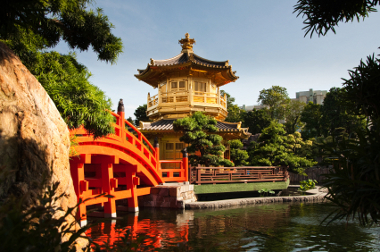
  • Beijing: Don't just fly here, stay here. Beijing packs in more world-class sites than many whole countries are able to offer: The Great Wall, Tiananmen Square, the Forbidden City, the Summer Palace, ancient hutong alleyways, majestic imperial parks...the list goes on and on.

3. Check the weather

At any time of the year there are places in China that enjoy ideal weather for travel, but almost nowhere is weather-perfect all year round. So to ensure your first trip to China doesn't become a wind-beaten blowout, an energy-sapping sun-scorcher or just a damp squib, get on top of where's hot and where's not in the month you're planning to travel. Generally speaking spring and autumn are the most comfortable seasons, although not in all provinces, and in many parts of China spring and autumn are no more than a few weeks long. For starters, check out this China weather rundown.

4. Use public transport

Ditch the taxis and the airplanes and hop on buses, bikes and trains to see China how the locals see it. Sure, it's easier flying from city to city, and then taking a taxi around each one once you're there. But where's the fun in it? China's public transport systems are already extensive, and getting bigger and better every year and many towns and cities are well set up for cycling - cycle lanes abound in Beijing, for instance. And don't worry about getting lost. Chinese people in general are extremely friendly, helpful and honest, especially to foreigners who can't speak Chinese, so there will always be a local on hand to put you back on track if you lose your way.

5. Eat, eat and then eat some more

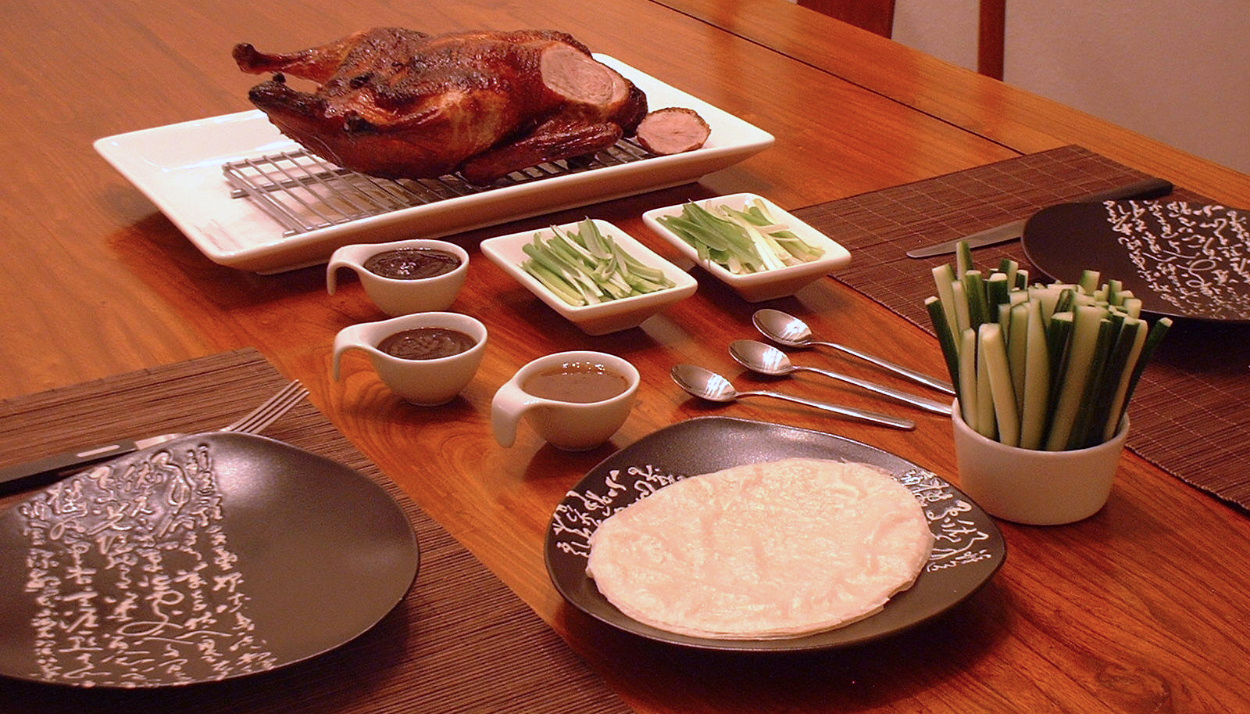
China has many wonderful features but arguably its standout attraction is its food. As this tasty introduction illustrates, cuisine varies tremendously from region to region - even breakfast time can be an assault on the senses - so try as much of it as you can. And don't listen to anyone who tells you to avoid the street food. It's often the best part of a city's culinary experience.

One final food tip from my aunt, who recently visited China for the first time: If you're not used to using chopsticks, ditch the white T-shirts and pack more dark-coloured tops. Noodle-slurping stains are an unavoidable nuisance for most China first-timers, and asking for a knife and fork in a restaurant over here...well, that's just cheating.

(C)

Wednesday, February 17, 2016

What to Eat in China

You may not travel just for the sake of traveling. If you go to China, you will find that the abundant, delicious food gives an almost artistic impression and becomes an integral part of your travel experience. There is a great variety of food to cater to even the fussiest eater.
Chinese cuisine has a very high reputation worldwide and represents the magnificent culture of the nation's almost five-thousand-year old glorious history. The country's very varied cuisine is considered as one of the top three in the world.
The staple food in China is usually rice and wheat. Millet, corn, buckwheat, potato, sweet potato and many kinds of legumes are also common. Apart from rice, wheaten food like steamed bread, noodles, deep-fried twisted dough sticks, steamed stuffed buns, as well as various gruels, cakes and snacks with special local flavors always make the dining table rich and colorful to bring you extraordinary treats.


China is a big country with a vast territory abounding in natural resources, and the people's way of life, customs, economic and cultural development, as well as general local conditions, all vary. The local flavors and superb cooking form the present world-famous Eight Cuisines from the eight provinces of Shandong, Sichuan, Guangdong, Jiangsu, Zhejiang, Fujian, Hunan and Anhui, each of which has its own characteristics. Including the typical Beijing Cuisine and Shanghai Cuisine, which are also popular in China, the Chinese food & drink unfolds its refined and peerless delicacies perfectly.


You can enjoy the delicious Chinese food not only in superior restaurants with many facilities and quality service, but also in ordinary eateries that are much cheaper but still serve delicious dishes. Prices vary, based on the different conditions and the environment. Anyway, wherever you go for a meal, health, sanitation and safety are necessities that you should pay much attention to. Some appetizing local snacks are usually sold at the roadside eateries, night markets or street restaurants that are commonly found in the country.
Food in remote areas or cities, like Lhasa, is not as fine as that in large cities. Besides, there are not so many choices and you may not be used to the local taste, especially in the regions of many minority features and special eating habits.


Western-style dishes, which you may crave now and again, can also be found easily in China. Most of the star-rated hotels have a restaurant providing western dishes. In addition, some fast-food outlets, like McDonald's, KFC and Pizza Hut, are not only popular among Chinese people but also offer much convenience for overseas visitors.

We, TravelChinaGuide.com, are the first on-line travel agency that offers the food service 'A la Carte' especially for you, which will definitely bring you much higher flexibility to select dishes you like from the menu and enjoy authentic Chinese food to your heart's content.

(C)